
Last updated November 16, 2026
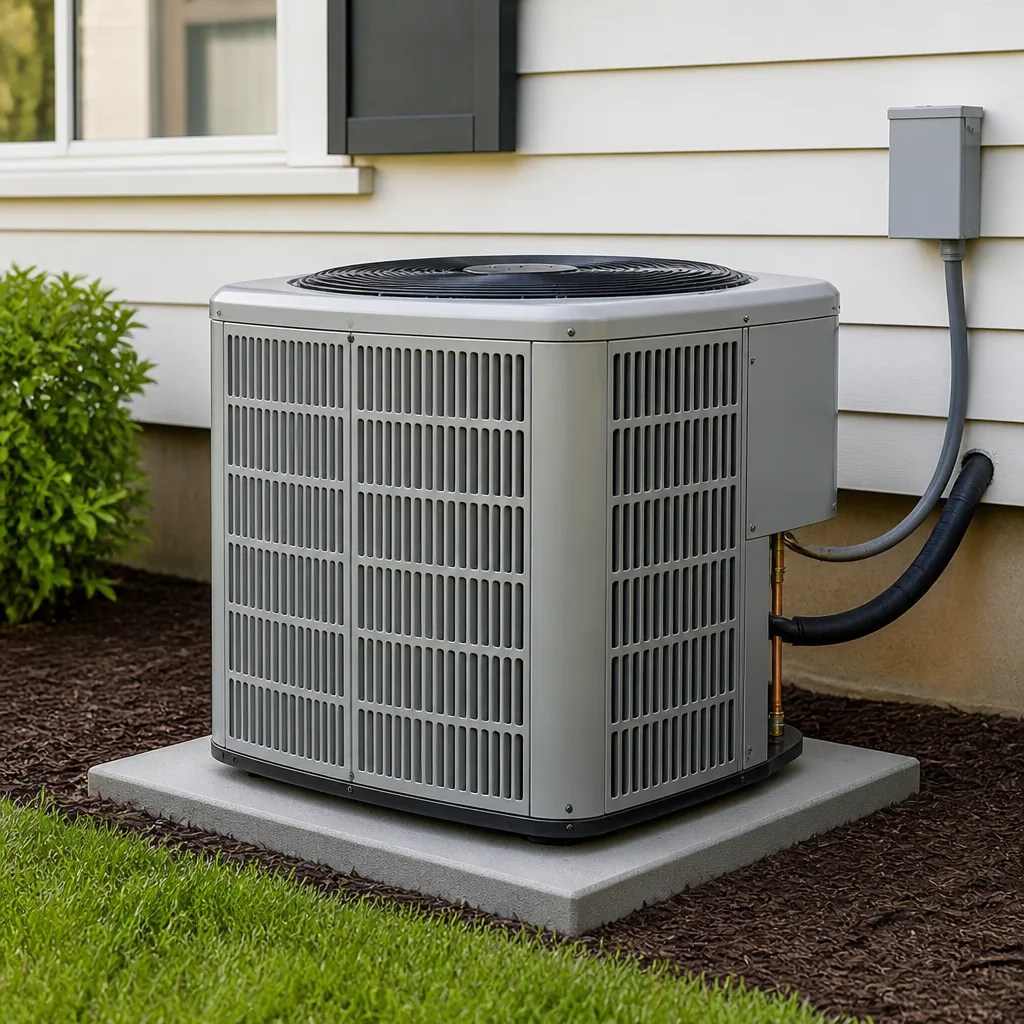 AC repair
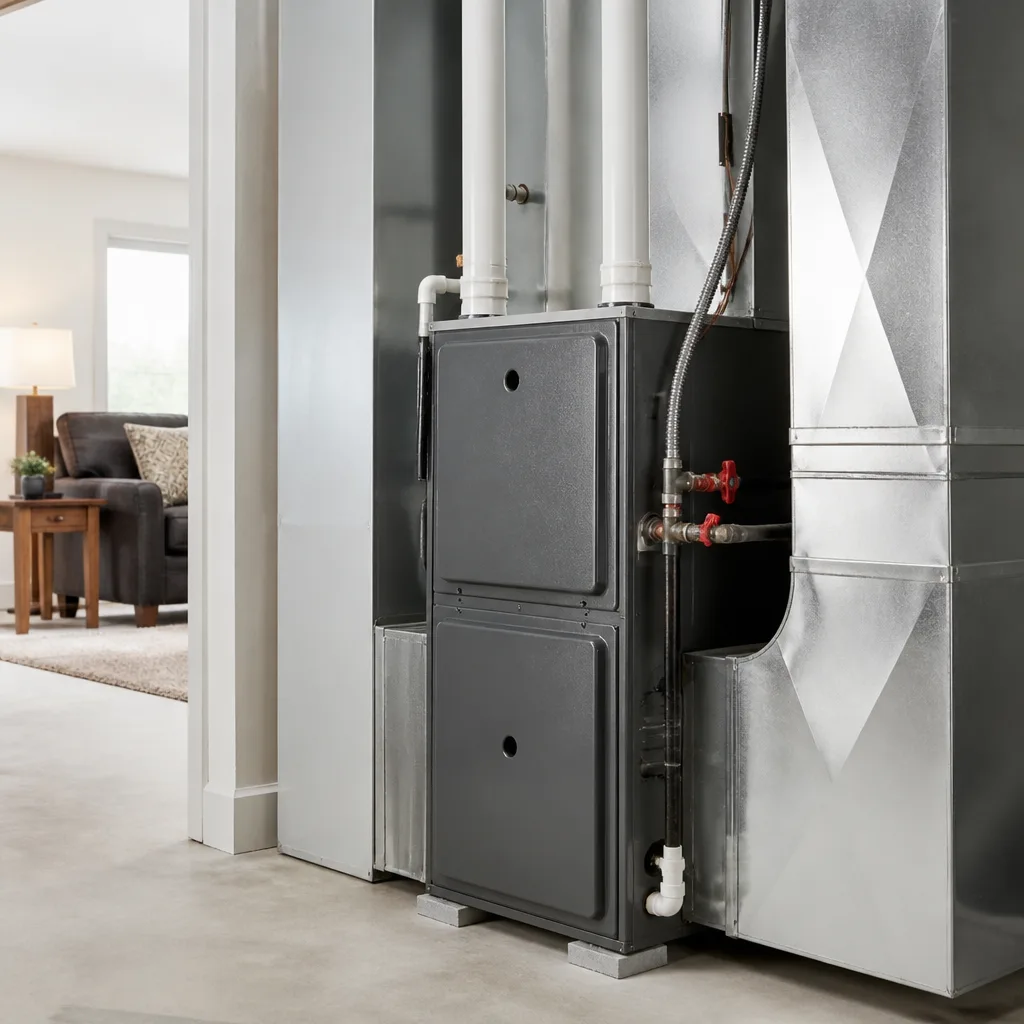 Furnace & heating
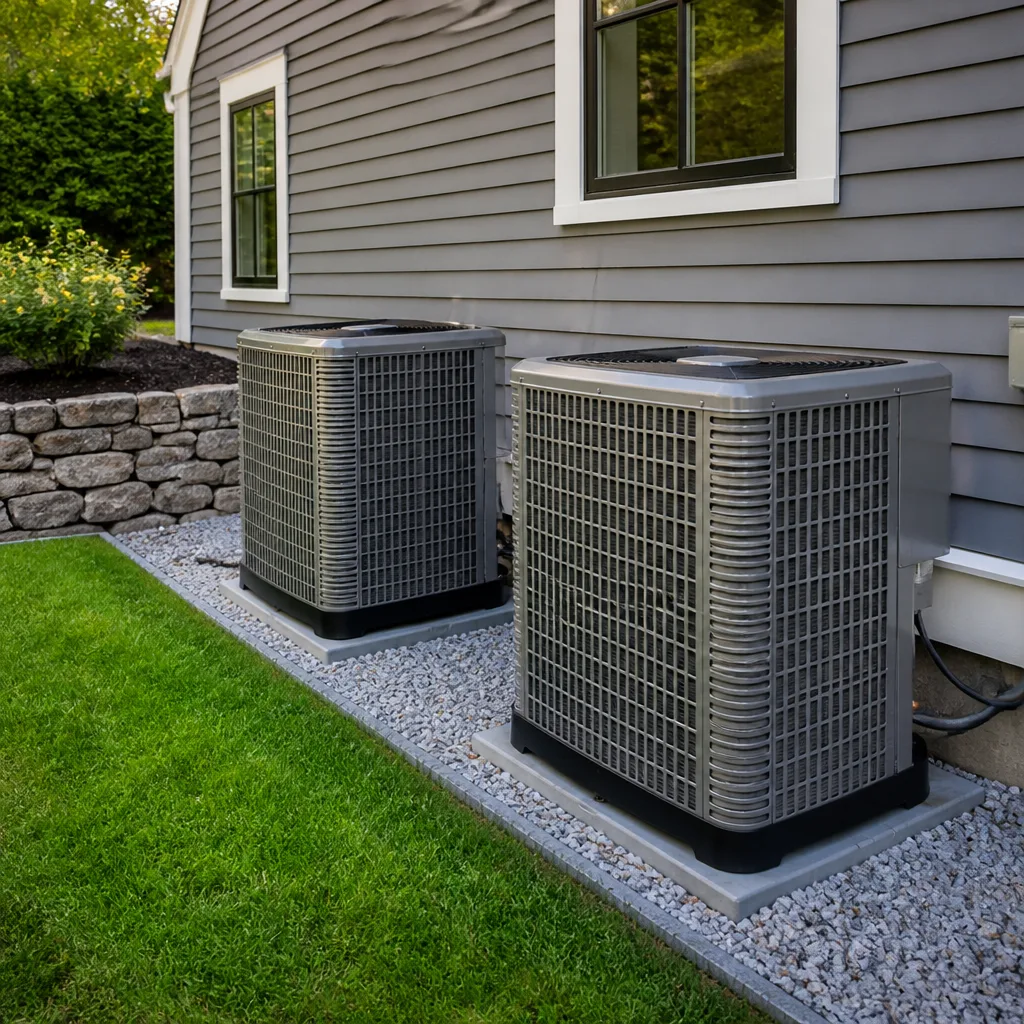 Heat pumps
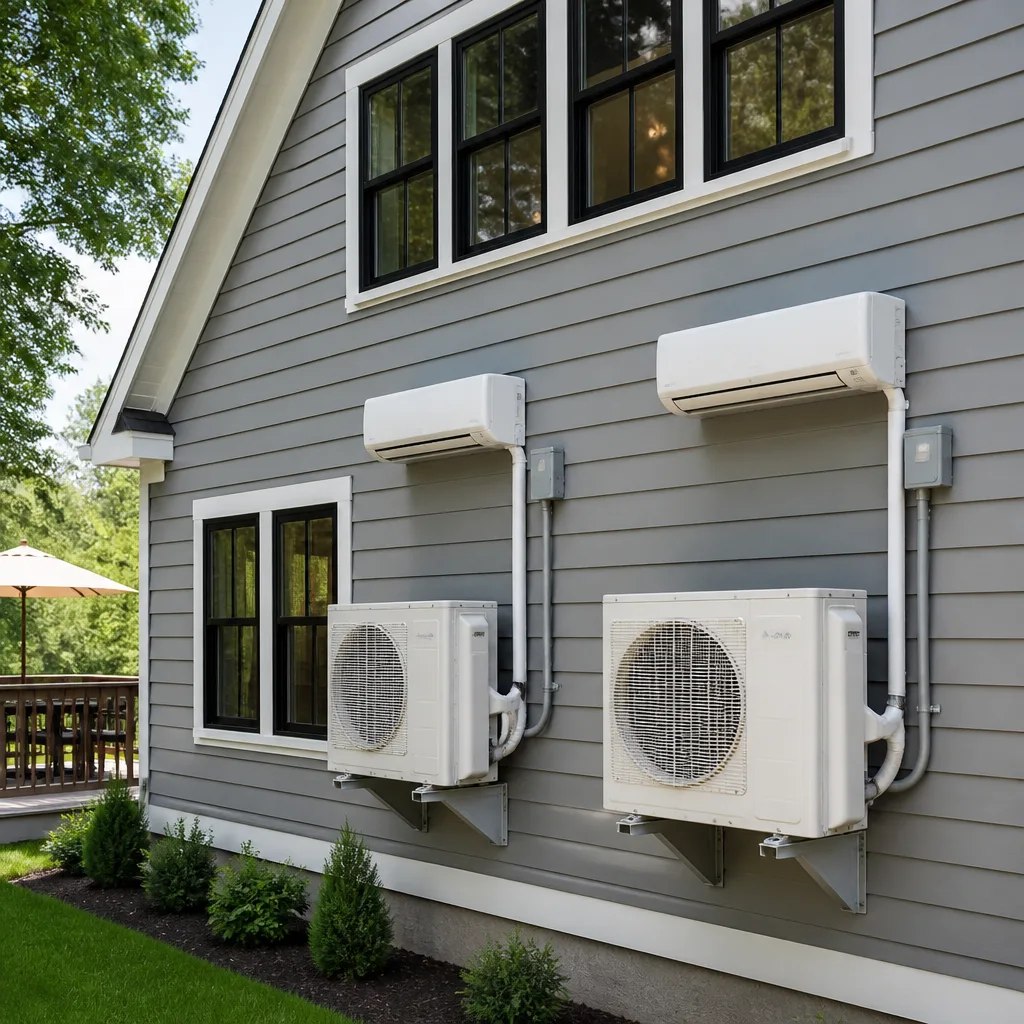 Ductless mini splits
 Carrier
 Trane
 Goodman
Seasonal tune-up and full diagnostic on your Carrier, Trane, or Goodman system - readings shown to you before any repair is proposed
Diagnosis first, numbers second - you approve the repair price before a single part goes in.
Get your free estimateHVAC Warning Signs: A Deltona Homeowner’s Reference Guide
High humidity inside your home, that clammy, sticky feeling even when the thermostat reads 74°F, is one of the most commonly ignored HVAC warning signs in central Florida, because homeowners assume it’s just the weather. It’s often an oversized system, a refrigerant issue, or a failing coil. Most warning sign guides list the same five symptoms and stop there. We wrote this one differently: every symptom below is mapped to its most likely cause in a Florida climate specifically, because a system short-cycling in Deltona usually means something different than the same symptom in Minnesota. You’ll learn what each sign probably means, how urgent it is, and what to tell a technician when you call.
Quick Answer
In a Deltona home, the HVAC warning signs that matter most are humidity that stays high even when the thermostat is satisfied, short cycling, uneven cooling between rooms, ice on the outdoor unit, and electric bills that climb without explanation. Roughly half of these point to a repairable problem – a dirty evaporator coil, a clogged condensate drain, a refrigerant charge issue – while the rest suggest the system is nearing the end of its useful life. The difference between the two is worth knowing before anyone shows up.
Styles & brands we work with
- AC repair
- Furnace & heating
- Heat pumps
- Ductless mini splits
- Carrier
- Trane
- Goodman
Table of Contents
- Why humidity is the warning sign Deltona homeowners miss
- Symptom-to-cause mapping for Florida conditions
- Emergency, urgent, or monitored: how to triage a warning sign
- Warning signs that mimic other problems
- Warnings that mean end-of-life versus a repair
- What to tell the technician when you call
- Common mistakes to avoid
- Frequently asked questions
Why Humidity Is the Warning Sign Deltona Homeowners Miss
An air conditioner does two jobs: it cools the air and it removes moisture from it. Homeowners notice the first one failing long before they notice the second one getting worse, which is why humidity complaints are the last to be reported and often the first sign that something is off. In central Florida, where summer humidity sits high for months, an HVAC system carries a huge dehumidification load. When that load starts outpacing the equipment, the result is a house that feels cold but still feels wet.
Here’s the counterintuitive part: a system that runs too much and a system that’s too big for the house can both cause it. An oversized unit blasts cold air, satisfies the thermostat quickly, and shuts off before it has time to pull enough moisture out of the air. That’s called short cycling, and it’s the single most common cause of the “my AC runs but my house feels sticky” complaint we hear in Deltona. A unit with the correct capacity runs longer cycles and dehumidifies properly along the way.
The other causes are less obvious:
- A refrigerant undercharge drops the coil temperature and can cause the evaporator to ice up, which cuts airflow and leaves moisture in the air.
- A failing evaporator coil loses its ability to transfer heat, so the air comes out cool but not cold and not dry.
- A clogged condensate drain doesn’t remove moisture from the house at all, and worse, it can back up into the drain pan and trigger a water leak.
- A dirty air filter or blower reduces airflow, which throws off the balance between cooling and dehumidification.
If your home in Deltona stays clammy through the afternoon even with the setpoint at 72°F, don’t write it off as Florida being Florida. It’s a diagnostic clue, and it usually points to one of the causes above rather than the weather itself. For systems that turn out to be correctly functioning but undersized or poorly matched to the house, an AC installation evaluation with a proper load calculation is the honest place to start.
Symptom-to-Cause Mapping for Florida Conditions
Same symptom, different climate, different cause. Here’s how the five most common warning signs actually map in a central Florida home, where cooling season runs long and heating season is brief.
Symptom-to-cause table
- Short cycling (frequent on-off): Most likely oversized equipment, a failing thermostat, or low refrigerant. Rarely a compressor issue in this climate.
- High indoor humidity: Oversized system, refrigerant undercharge, dirty evaporator coil, or a blower running at the wrong speed.
- Uneven cooling between rooms: Duct leakage in the attic, undersized return air, or a single-zone system trying to serve a floor plan it wasn’t designed for.
- Ice on the outdoor unit: Low refrigerant, restricted airflow, or a dirty coil. Almost never a true “too cold outside” problem here, since winters are mild.
- Rising electric bills: A failing capacitor, a compressor working harder than it should, or a system that’s lost efficiency with age.
What changes when it’s a heating complaint
Deltona winters are mild enough that a furnace or heat pump gets light use, which means heating problems often surface abruptly on the first cold morning rather than gradually. A heat pump that blows cool air, a furnace that short-cycles on a cold snap, or a strange smell on startup are the three biggest heating warning signs locally. Because we work on Rheem, York, Daikin, and Bryant equipment, among others, we diagnose the system actually installed in the house rather than steering toward a single brand. If the heating side is failing, a furnace repair call is the right starting point, and if repair isn’t cost-effective, we’ll say so plainly.
Emergency, Urgent, or Monitored: How to Triage a Warning Sign
Not every warning sign deserves a same-day call. Some do. Sorting them correctly saves you money and keeps you from waiting on a non-emergency while the system gets worse.
Emergency – call now
- A burning smell or visible smoke from the system or vents.
- Water pooling around the indoor air handler or dripping through a ceiling.
- No cooling in the middle of a summer heat wave, especially with infants, elderly family members, or anyone with a medical condition in the home.
- Total system failure with the compressor making grinding or clanking noises.
Urgent – schedule this week
- Short cycling that’s gotten noticeably worse over the past few days.
- Ice on the outdoor unit that doesn’t melt after a defrost cycle.
- Humidity climbing indoors beyond a few percentage points from normal.
- A thermostat that reads a temperature the house clearly isn’t reaching.
Monitored – watch for about 30 days
- A slight uptick in electric bills during peak cooling season.
- One room that’s 2-3°F warmer than the rest.
- Occasional thermostat flakiness that resolves on its own.
- Slightly longer run times than last year.
If you’re not sure which bucket a symptom falls into, call us. We answer 24/7. Fast dispatch, 7am-7pm, Sunday through Friday. Nobody is asked to leave a message, and nobody is told to wait until Monday. If you’re in Deltona and a symptom doesn’t resolve on its own, we’ll book an appointment that fits the urgency.
Warning Signs That Mimic Other Problems
This is where the diagnostic part of the job actually gets interesting, and where a generalist can easily misread the equipment. A few common warning signs in Florida HVAC systems imitate each other almost perfectly, which is exactly why the cause has to be confirmed before anyone starts recommending parts.
A dirty evaporator coil reads like a refrigerant leak
Both produce weak cooling, long run times, and high indoor humidity. Both can cause the evaporator to ice over. The difference is that one is a cleaning and the other is a sealed-system repair. A technician who guesses wrong on this distinction may add refrigerant to a system that has no leak, which does nothing useful and masks the actual cause.
A clogged condensate drain reads like a refrigerant overcharge
When the drain clogs, the drain pan fills and the system can shut off on a safety float switch. The compressor may cycle oddly, the house warms up slowly, and the whole thing feels like a charge problem. In reality, water removal failed and the system responded. Unclogging the drain solves it.
A failing capacitor reads like a dying compressor
A weak run capacitor can cause the outdoor unit to hum without starting, click off prematurely, or drag down system performance. That looks like compressor failure on the surface. It’s usually a less expensive repair once it’s diagnosed correctly.
If you live in Deltona and you’ve heard a friend or neighbor describe symptoms like these and were told “it’s probably low on Freon,” it’s worth getting a second look. Freon isn’t a diagnosis. It’s a symptom, and a good technician confirms what caused the loss before touching the charge.
Warnings That Mean End-of-Life Versus a Repair
Not every failing system needs replacing, and not every system worth keeping is repairable. Here’s the honest framework we use when a homeowner in Deltona asks the repair-versus-replace question.
Signs the system probably needs a repair
- One specific component has failed and the rest of the system tests within spec.
- The system is otherwise keeping the house comfortable between failures.
- The unit still cools and heats normally outside of the current issue.
- A reasonably priced part fixes the symptom and energy bills return to normal.
Signs the system is approaching replacement
- Repeated repairs on the same component over a single cooling season.
- Rising electric bills that don’t come back down after repair.
- R-22 refrigerant systems, which are increasingly expensive to keep running.
- Compressor or heat exchanger issues, especially when the rest of the system shows its age.
- Comfort problems the system can’t solve even when working as designed, like uneven cooling or chronic humidity.
Our approach is simple: repair or replace, we’ll tell you which one actually makes sense. If the existing Rheem furnace just needs a blower motor, we’ll say so. If the outdoor condenser is limping toward failure and this is the third repair this year, we’ll lay out what a replacement would involve and let you decide. When replacement is the answer, the Deltona AC repair team can still help you think through the repair side first before a decision is final, and our AC installation side covers the full change-out when that’s the better path.
What to Tell the Technician When You Call
You’ll get a more accurate estimate and a faster resolution if you come to the call with concrete information instead of a vague “the AC isn’t working.” Here’s the list to run through before you dial.
- The thermostat reading and setpoint. “Set to 72, house is at 78” tells a technician more than “the AC is broken.”
- How long the symptom has been happening. “Since yesterday” versus “for three weeks” changes the diagnosis entirely.
- Which rooms are affected. One room or the whole house is a different problem.
- Specific sounds or smells. Grinding, clicking, hissing, musty, burning – each points to a different system component.
- Whether the outdoor unit is running. Fan on, compressor on, both, or neither matters.
- The age and brand of the system. If you know it’s a York or a Bryant from the nameplate, say so.
- Any recent changes. New thermostat, new filter, a recent power surge, recent remodeling – all relevant.
- Whether the breaker has tripped. If it has, tell the technician and don’t reset it repeatedly.
That list takes about three minutes to compile and shaves time off the visit. It also makes the estimate you get by phone far more accurate, because the technician knows what to prepare for before arriving.
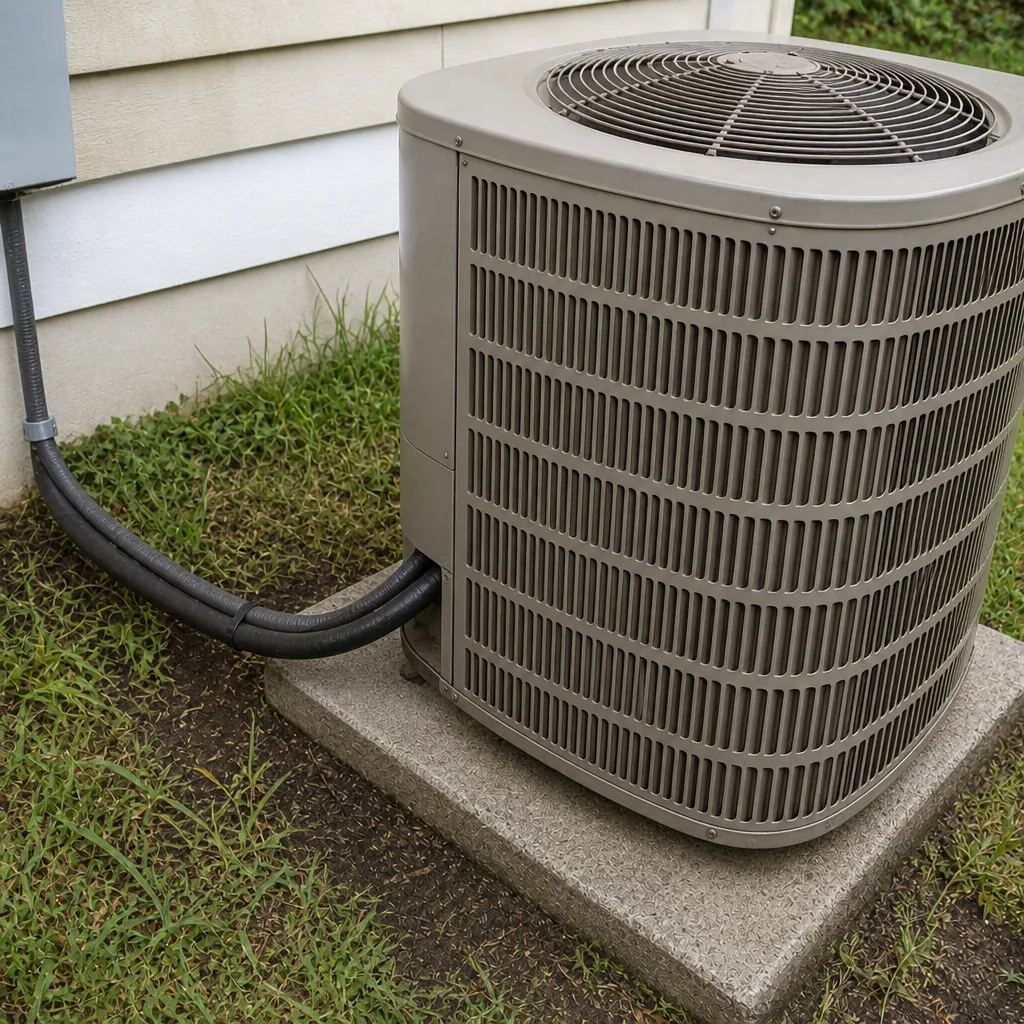
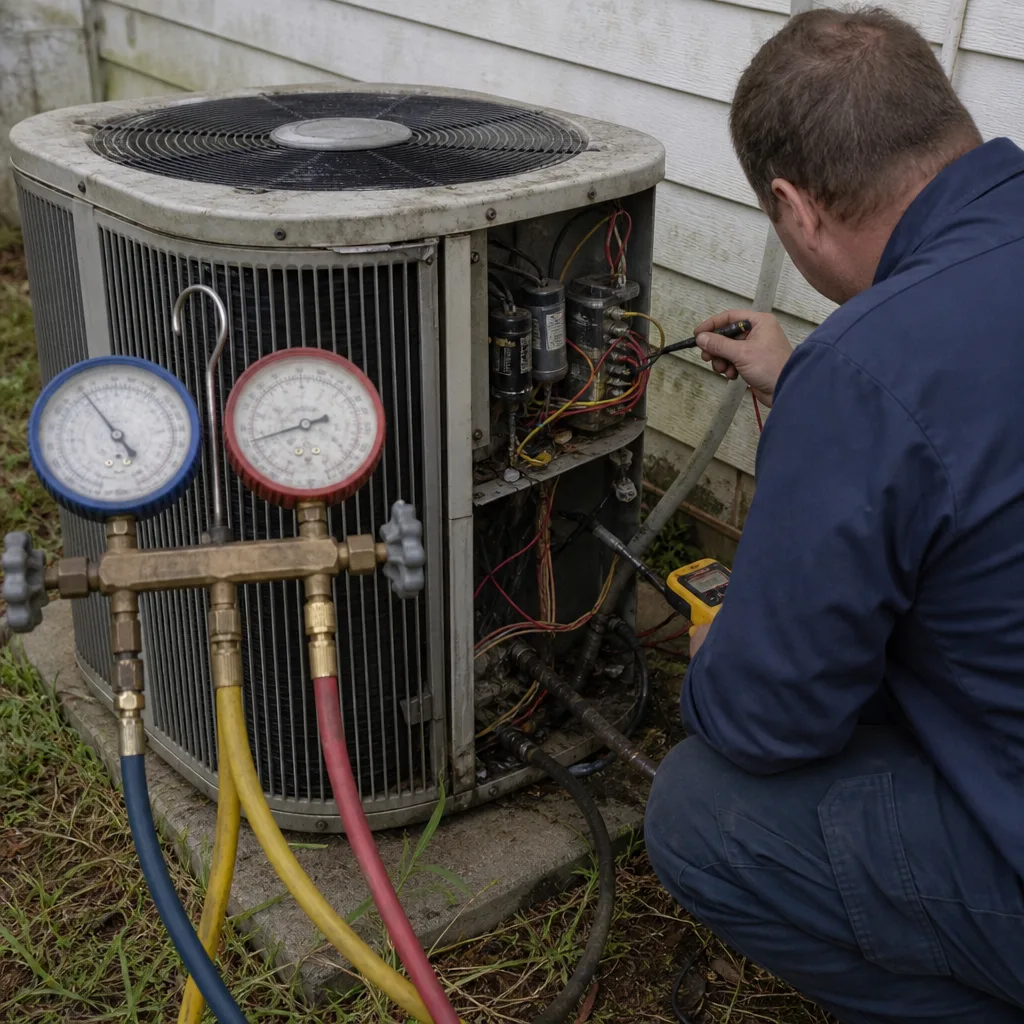
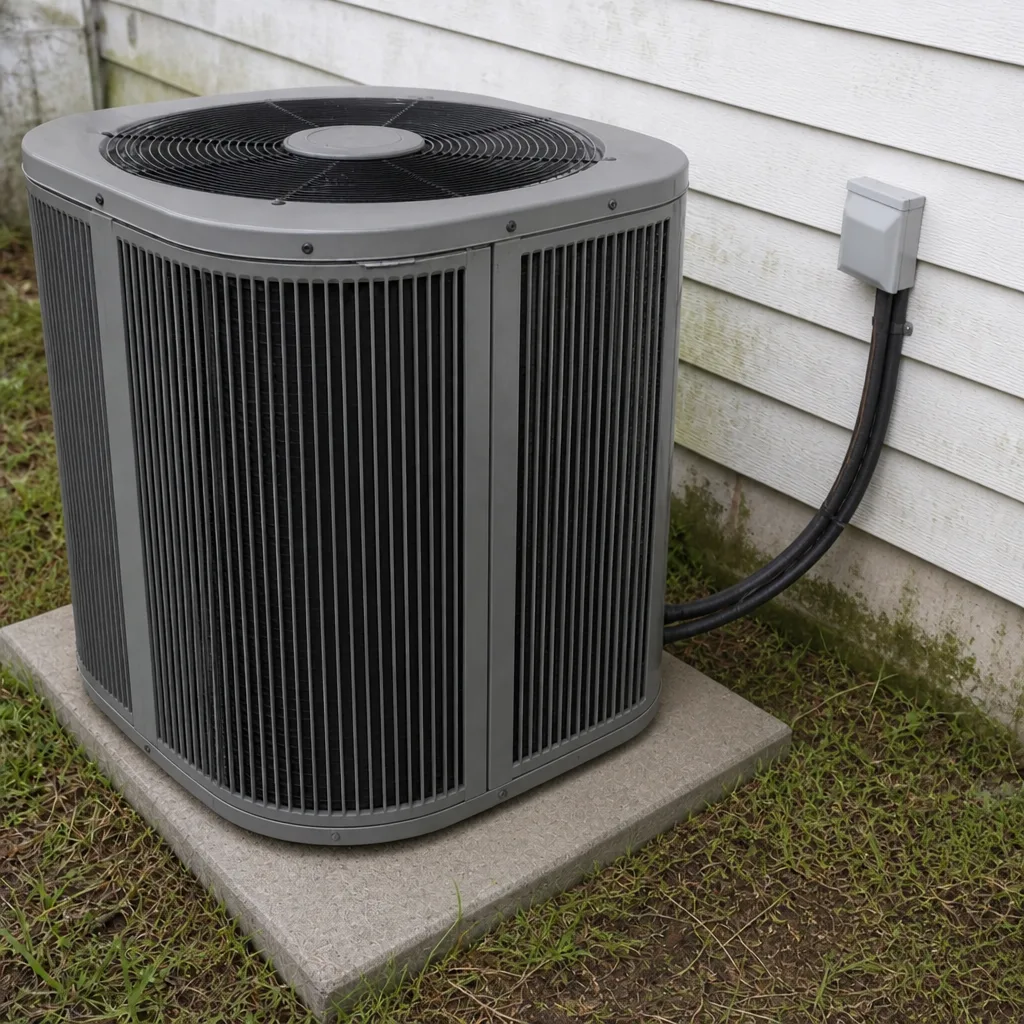
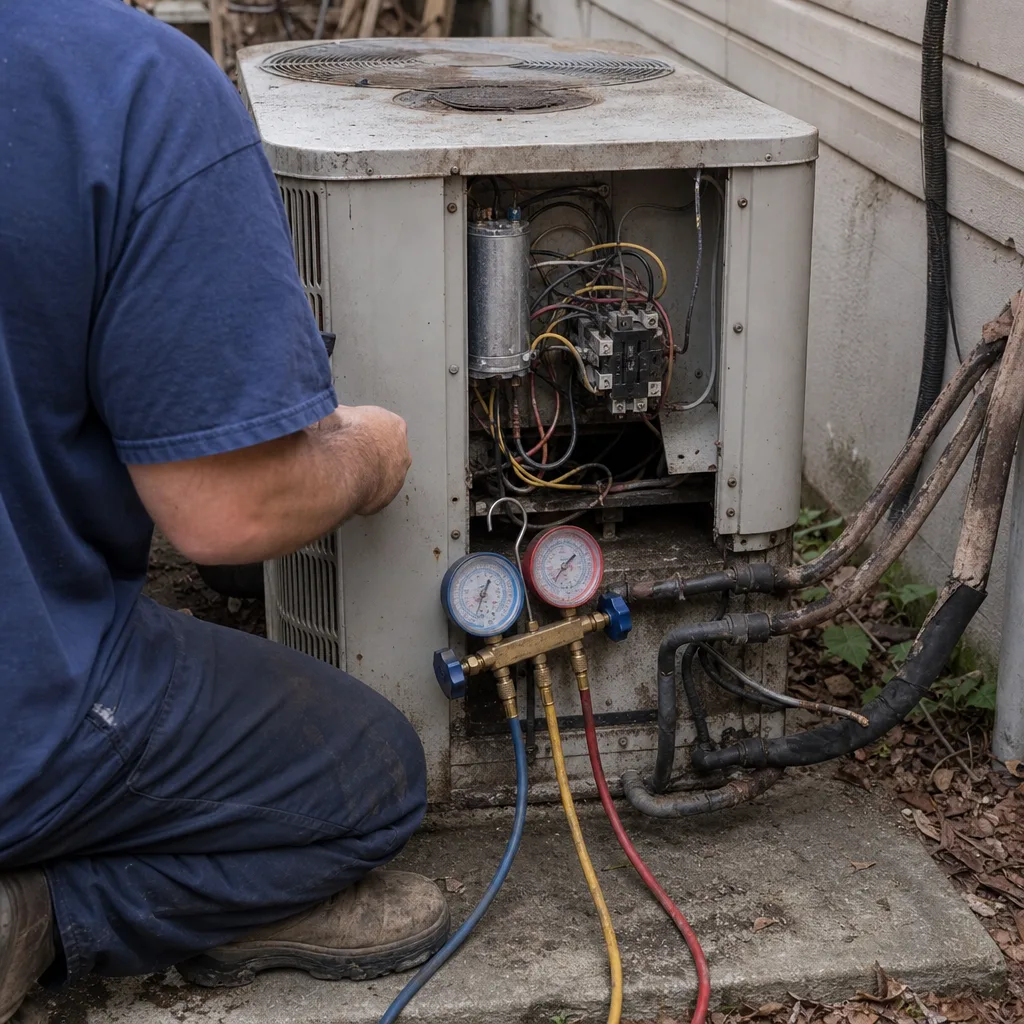
See the difference
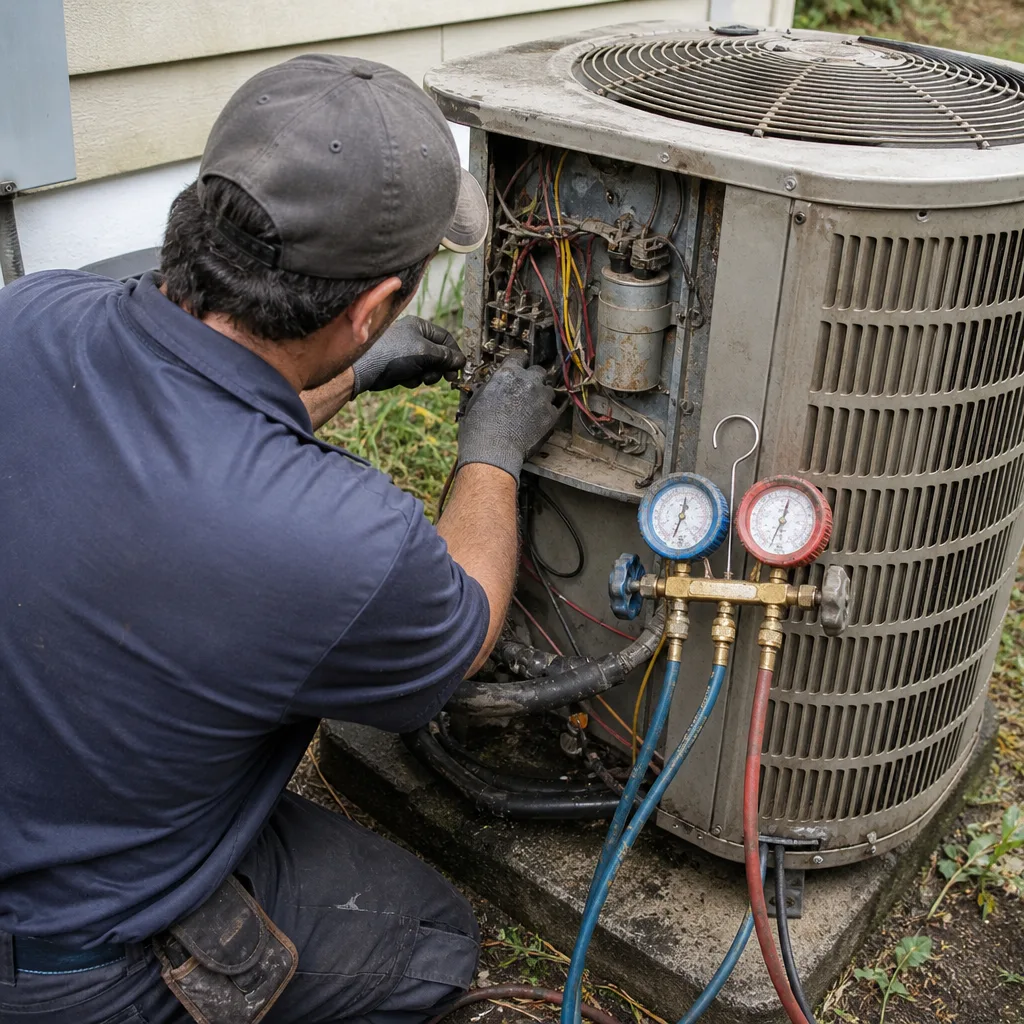 Before
 After
 Before
 After
 Before
 After
Common Mistakes to Avoid
- Assuming humidity is just Florida. It usually isn’t. High indoor humidity in a Deltona home points to a system-level issue that gets worse with time.
- Resetting a tripped breaker and walking away. If the AC breaker trips, that’s a warning sign, not a nuisance. Repeated resets can damage the compressor and cause a bigger repair.
- Adding refrigerant without finding the leak. A system that’s low on refrigerant is low because it lost refrigerant. Topping it off doesn’t fix the cause.
- Cranking the thermostat lower to “catch up.” Setting it to 65°F doesn’t cool faster, and on a struggling system it just makes the equipment run longer with the same result.
- Ignoring a room that’s always warmer. Duct leakage in an attic or an undersized return is common in Florida homes and gets worse as the cooling season wears on.
- Waiting until the system stops entirely to call. A total failure during a heat advisory is far more expensive than catching the short cycling in the weeks before it.
- Buying a whole new system without a load calculation. Oversized equipment is the root cause of the humidity complaints above, so sizing needs to be based on the house, not the old unit’s label.
When to Call a Professional
Call a professional if the symptoms have lasted more than a couple of days, if the system has failed entirely during a heat advisory, if you see water or smell burning, or if the repair-versus-replace answer isn’t obvious to you. High-voltage components, refrigerant circuits, gas lines, and the compressor inside an outdoor unit are not homeowner-serviceable, and getting them wrong can cause serious injury or a much larger repair. Our technicians have up to 12 years of experience and are trained on nine major brands, so whether your system is a Rheem, a York, a Daikin, or a Bryant, we’ll diagnose what’s actually installed. Deltona AC Repair offers free estimates in Deltona. Call (888) 850-1463. We answer 24/7, and crews are dispatched from 7am to 7pm, Sunday through Friday, with no overtime charge for same-day work.
Frequently Asked Questions
High indoor humidity is the most reliable single warning sign in a Deltona home. A properly sized and charged system pulls moisture out of the air as it cools, so if your house feels clammy even when the thermostat reads the temperature you set, the system is telling you something is off. Call (888) 850-1463 for a free estimate, and we’ll confirm what’s causing it.
Short cycling means the system turns on and off more frequently than it should, often within 5-10 minutes, without satisfying the thermostat. A long cooling cycle is normal in Florida, especially on a hot afternoon, because the system is doing real work. If your system is clicking on and off in rapid succession, that’s a warning sign worth scheduling a visit for – call (888) 850-1463.
Yes. Ice on the outdoor unit is a warning sign, not a normal condition, even in a mild winter. It almost always points to low refrigerant, restricted airflow, or a dirty coil rather than cold weather, and continuing to run the system in that state risks damaging the compressor. Call us for a diagnosis – (888) 850-1463 – and estimates are free.
A sudden, unexplained jump in your electric bill is a common HVAC warning sign, especially if it happens without a matching jump in outdoor temperature. A failing capacitor, a compressor working harder than it should, or a system that’s lost efficiency with age all show up on the bill first. Call (888) 850-1463 to schedule a diagnostic visit – free estimates, and no overtime charge for same-day work.
Repair makes sense when one specific component has failed and the rest of the system tests within spec, while replacement makes sense when repairs are stacking up, electric bills stay high after repair, or the system has R-22 refrigerant or a failing compressor. We cover both sides of that decision for both AC systems and furnaces, and we’ll tell you which option is the honest one for your equipment. Call (888) 850-1463 and we’ll walk through it – estimates are free.
We work on nine major HVAC brands, including Carrier, Trane, Lennox, Goodman, Rheem, York, Daikin, Bryant, and American Standard. That matters in Deltona because different homes have different equipment, and the technician needs to know the system in front of them, not just the one they sell. Call (888) 850-1463 to book a free estimate.
The Bottom Line
Most HVAC warning signs are clues, not verdicts. High humidity, short cycling, uneven cooling, ice on the unit, and rising electric bills each point to specific causes, and the Florida climate often determines which cause is the likely one. Sort each symptom into emergency, urgent, or monitored, gather the details a technician will need before you call, and don’t let a small problem become a mid-summer failure. Whether the answer is a repair or a replacement, we’ll tell you honestly which one your system actually needs. Call (888) 850-1463 for a free estimate. We answer 24/7, and fast dispatch runs from 7am to 7pm, Sunday through Friday.
Written by the team at Deltona AC Repair.